
“Does a massage change your voice or affect your teeth?” is a question I keep getting asked more often than I’d expect in the treatment room – usually right after a super relaxing facial or sculpting session where the jaw, cheeks and neck have all got a good workout.
I’m Sevine Forster, and after years working with facial muscles – from London’s Mayfair to my Brisbane studio at The Facial Hub – I can tell you this: massage definitely influences how your face feels and functions, but it doesn’t change your voice or move your teeth. What it can do is release tension, which really helps with better voice production and generally how your jaw and facial muscles work together.
Let’s break this down because there’s a lot of myth and some misunderstanding surrounding this area.
Contents
- 1 Understanding The Facial-Muscle And Voice Connection
- 2 The Role Of Jaw And Facial Muscles In Speech
- 3 Why Your Voice May Feel Different After A Session
- 4 Teeth Position And Orthodontic Reality
- 5 How Muscle Release Influences Bite Perception
- 6 A Real Brisbane Client Outcome
- 7 What Current Research Suggests About Facial Therapy
- 8 Environmental And Lifestyle Factors In Brisbane
- 9 Recommended Treatment Frequency For Tension Relief
- 10 Safety, Hygiene, And Professional Care Standards
- 11 When To Modify Or Avoid Treatment
- 12 Why Clients Feel Such Noticeable Results
- 13 Final Thoughts — A Balanced Approach To Facial Function
- 14 FAQ
- 14.1 Can getting a facial massage really help with singing or speaking?
- 14.2 Does getting a facial massage mess with orthodontic results?
- 14.3 Why is my bite feeling more even all of a sudden?
- 14.4 Can you get a facial massage if you’re in the middle of TMJ treatment?
- 14.5 When can I get a facial massage after a dental procedure?
Understanding The Facial-Muscle And Voice Connection
Your face isn’t just skin and bones; it’s a network of muscles, fascia, nerves, and connective tissue, all working together every second. When one part tightens up or compensates, everything else has to adapt – including your jaw muscles, temporalis muscle and the suprahyoid muscles that support your voice box.
From a therapist’s point of view, massage is all about getting that balance back across the system. And it can be surprising how much of an impact it can have on your jaw movement, your breath flow, and how well your voice is produced – all without actually changing anything.
The Role Of Jaw And Facial Muscles In Speech
The muscles I work with play a pretty big but often overlooked role in speech. When they’re tight, it can make your jaw feel like it’s stuck and that tension can then radiate up into your face and throat.
In practice, that can feel like:
- A bit of restriction when you’re trying to speak
- Mild vocal constriction – it’s like your voice has got a bit stuck
- Reduced ease in articulation – words feel like they’re harder to get out
But once those muscles have been softened through treatment, clients often notice their speech is easier and smoother.
Why Your Voice May Feel Different After A Session
Your voice box is the bit that produces sound, but the quality of that sound depends a lot on the surrounding structures – how you’re standing, how you’re breathing and how tense your muscles are. So massage can influence:
- Whether your neck is in a good position and your jaw is aligned correctly
- Airflow through your vocal tract – it’s like the voice box has got more room to breathe
- Vocal resonance – how easy is it to project your voice
As a result, your voice might sound clearer or a bit less strained, simply because things are working a bit better, not because anything actually changed.
Teeth Position And Orthodontic Reality
There’s a long-standing myth that massage can move your teeth around – it just can’t.
Teeth are firmly rooted in bone and need some careful, controlled pressure over time, which is what you get with orthodontic treatments like clear aligners or braces.
How Muscle Release Influences Bite Perception
Although massage can’t actually change your tooth position, it can affect how your bite feels. And the main reason for that is muscle tension around the jaw joint.
When those surrounding muscles are all tight, your jaw can get pulled slightly out of whack. But after working through some soft tissue releases, the jaw might just settle into a more natural-looking bite position, taking some of that pressure off and making everything feel a lot more even.
This is why people sometimes get the feeling that their bite has somehow “changed” – when what’s really happened is that it’s just working more comfortably.
A Real Brisbane Client Outcome
One of my clients came in with chronic jaw tension, headaches, and teeth grinding and a constant feeling of tightness from clenching. I see it a fair bit in Brisbane – it’s like the perfect storm of stress, screen time, and the environment all coming together to make things worse.
But after a series of treatments, her symptoms got a lot better. She noticed her neck muscles were more comfortable when speaking. From a muscle point of view, nothing had physically changed – but everything felt a lot more balanced.
Loads of people experience similar results after a face-sculpting treatment in Brisbane when they’ve got chronic jaw tension, too.
What Current Research Suggests About Facial Therapy
You’re starting to see a lot more overlap between beauty treatments and the kind of work that speech therapists and voice coaches do – especially when it comes to muscle tension.
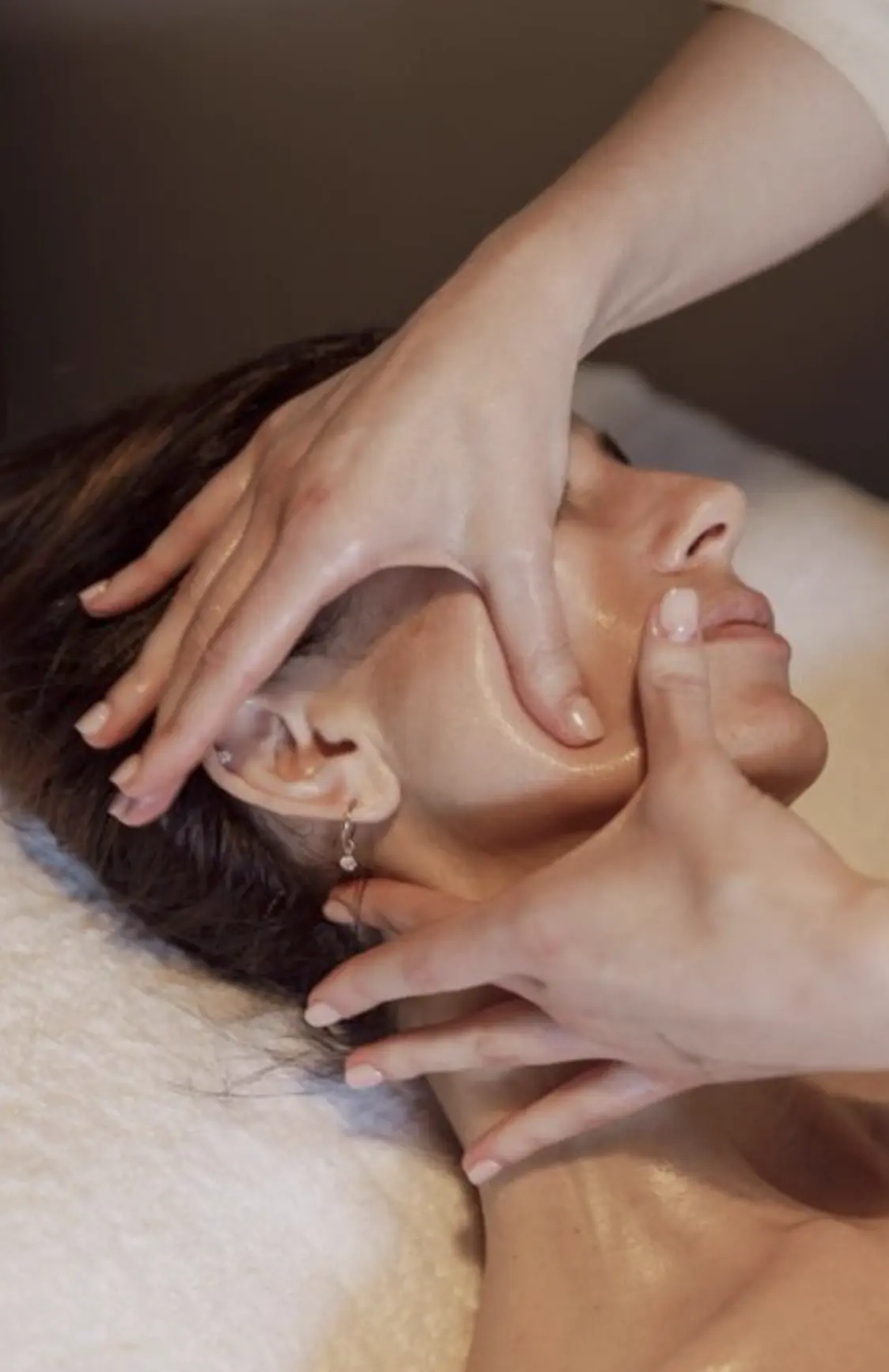
Here’s a simplified overview based on 2026 insights:
| Effect Of Facial Massage | Evidence Level | Practical Outcome |
|---|---|---|
| Muscle relaxation | Strong | Reduced clenching and discomfort |
| Circulation improvement | Established | Better tissue health |
| Lymphatic support | Strong | Reduced swelling and pressure |
| Bite changes | Not supported structurally | Temporary functional shift |
| Voice changes | Indirect only | Improved ease and voice quality |
In speech language pathology, professionals may use vocal exercises and posture work, but structural issues involving the vocal folds require medical treatment.
Environmental And Lifestyle Factors In Brisbane
Brisbane’s climate isn’t just hot and sunny – it also plays a sneaky part in making you clench your face in frustration. Prolonged exposure to heat, humidity and UV takes its toll on the skin – and your facial muscles.
And then there’s the modern stuff we all do – stuck in front of a screen all day, for example. That can make your face go a bit stiff. We’re talking:
- That jaw clenching? Yeah, that’s a real thing.
- Tension in the TMJ (temporomandibular joint).
- Your face just doesn’t feel as relaxed when you’re speaking or chomping down on a snack.
So, it makes sense that facial massage isn’t just a cosmetic fix – it’s a way to keep your whole face and mouth healthy for the long haul.
Recommended Treatment Frequency For Tension Relief
How often you need to come in for treatment really depends on how you’re feeling and your lifestyle.
Some general rules of thumb are:
- If things are getting really stressful, fortnightly sessions can really help.
- For most people, a monthly maintenance session helps keep things relaxed and comfortable.
But we also take into account things like:
- Any recent dental work – a root canal, tooth extraction or other procedure.
- If you’ve got a night guard or oral appliances in your mouth.
Your face sculpting treatment in Brisbane can be a really gentle way to reset your facial muscles, without pushing for major changes.
Safety, Hygiene, And Professional Care Standards
Working on the jaw and mouth area is a delicate business, and we totally get it. You need to feel confident that we’re taking care of you – and your face – with the highest level of hygiene and skill.
In our clinic, all our tools are sterilised to the same standards as a hospital, and we adjust our treatments to your unique situation. And we’re totally careful about areas around gum disease or after a dental appointment.
When To Modify Or Avoid Treatment
Most of the time, facial massage is pretty safe – but there are some situations where you might need to take it easy or skip a session altogether:
- Right after a dental appointment
- If your TMJ is really inflamed
- If you’ve got a bad case of jaw clenching
- If you’ve got a diagnosed voice disorder – like muscle tension dysphonia
In these cases, working with a speech-language pathologist or your dentist is a good idea – we can still help you relax, but we can’t skip out on other stuff like speech therapy.
Why Clients Feel Such Noticeable Results
The impact of facial massage goes way beyond just looking good.
It helps with:
- Getting your nervous system back in balance
- Circulation and muscle recovery
- Retraining your facial muscles to relax properly
And that means:
- Easier daily functions – speaking, eating, and smiling
- Your voice works more smoothly
- Your whole face feels more relaxed
It’s not about changing your face — it’s about helping it work properly again.
Final Thoughts — A Balanced Approach To Facial Function
Massage isn’t going to reshape your voice or shift your teeth around – but it can make a big difference in how your face feels & how well it functions.
If your jaw is tight, you’re getting worn out from talking, or you just feel like you’re perpetually squinting – it’s probably because your muscles need care, not some drastic overhaul.
FAQ
Can getting a facial massage really help with singing or speaking?
Yeah, it can. Letting go of some of that muscle tension and getting your vocal resonance back on track can make talking or singing feel a lot easier.
Does getting a facial massage mess with orthodontic results?
Nope – that kind of tooth movement needs specialised care like braces or aligners.
Why is my bite feeling more even all of a sudden?
When your muscles relax, your jaw can settle into a more balanced position.
Can you get a facial massage if you’re in the middle of TMJ treatment?
It can be helpful for muscle tension relief, but check with your doctor first.
When can I get a facial massage after a dental procedure?
Give it a week or two after major dental work before booking a session.